Some 19th century ‘case’ of the Casa Boncompagni Ludovisi (Part II of II): Foligno

By Carol Cofone

In our last post we examined how the Boncompagni Ludovisi in the latter part of the 19th century came into some spectacular properties in central and north Italy. Marriages of a daughter, a granddaughter and a grandson of Rodolfo, Prince of Piombino (VIIII) from 1883-1911, increased still further the number of impressive case at the family’s disposal. These additions included a villa at Pelago in Tuscany, another (massive) villa at Bagnarola di Budrio near Bologna, a palazzo and villa at Merate in Lombardy, and a palazzo at Varallo Sesia in the Piedmont region.
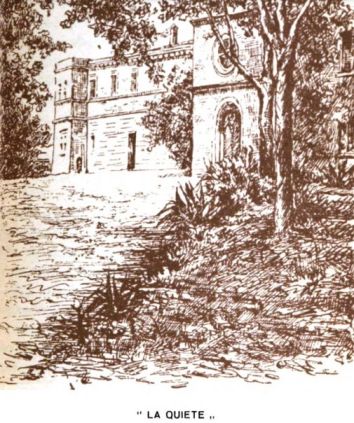
LaQuieteDetail

Then there is the villa ‘La Quiete’ at Foligno in Umbria, closely associated with Agnese Borghese, who soon after her 18th birthday married Rodolfo Boncompagni Ludovisi on 31 May 1854. But this villa was not an ancestral Borghese family possession.  Rather it came to the Boncompagni Ludovisi through Agnese’s own deep-seated desire, one which inspired her search for a summer home near Foligno. [Read more…]
Some 19th century ‘case’ of the Casa Boncompagni Ludovisi (Part I of II): Pelago, Bagnarola, Merate, Varallo

BL_crest

By Carol Cofone

In English, we have two words to help us understand how we feel about where we live:  “house” is the physical structure; “home” is the emotional shelter.  Not so in Italian. The word casa means house, and it means home, and it also means dynasty—as in the instance of the Casa Boncompagni Ludovisi, the Roman noble family that counts its lineage back to the 10th century AD.

These definitions can help us see how four generations of the family in the 19th and earlier 20th centuries who had ownership or access to a stunning array of properties felt about them. Their sensibilities were likely complex and confounding. For these four generations—whose birthdates encompass the period from ca. 1830-ca. 1910—the wonders of these castles and palaces, villas and tenute, perhaps seemed even commonplace. At any rate, in this period we do not find much evidence for the family indulging in a hedonistic enjoyment of the luxuries that attended their lives.

This ethos was sustained not least thanks to the influence of Agnese Borghese Boncompagni Ludovisi, born on 5 May 1836, and—as we shall see—from her earliest childhood instilled by her maternal grandmother with a “Borghesian” sense of the duty of nobility. Agnese married Rodolfo Boncompagni Ludovisi, Prince of Piombino (VIII), on 31 May 1854, and died on 22 March 1920 at the age of 83. All six of the couple’s children survived them. [Read more…]

“The Destruction of Rome”: Herman Grimm (1886) on the development of the Rione Ludovisi

VL_PRG_1883

The Villa Ludovisi as it appears in Rome’s Piano Regolatore of 1883—as yet untouched.

Herman Friedrich Grimm (1828-1901) was a groundbreaking German art historian with a special expertise in the art of Raphael and Michelangelo; more generally, he saw himself as the intellectual heir of Goethe. He was born into an academic family: his father Wilhelm and uncle Jakob (who for their entire lives shared the same roof) were the famous philologists and folklorists known as “The Brothers Grimm“.

In late January 1886 Herman Grimm penned a “letter”—really a full-blown essay—entitled The Destruction of Rome, in which he strongly expressed his disapproval of how Rome was physically adapting itself to serve as capital for the recently-created kingdom of Italy. It saw publication first in March of that year, in the Deutschen Rundschau, but then in many other venues, with translation into Italian and English. Here Grimm reserved particular scorn for the tragic dismantlement of “the most beautiful garden…[on] the whole earth”, the Villa Ludovisi. The relevant bits of the letter can be found below, at the end of this post. [Read more…]