In Sweden, the rediscovery of a Lavinia Fontana portrait—of Pope Gregory XIII Boncompagni’s daughter-in-law, Costanza Sforza

LAVINIA_FONTANA_MEDAL

Medal (dated 1611, by F. A. Casoni) depicting two sides of the Bolognese painter Lavinia Fontana. The reverse legend: PER TE STATO GIOIOSO MI MANTENE (“because of you I am in a constant fervor”). Credit: Dr Busso Peus Nachfolger

Well, this certainly is unexpected. Just announced in Sweden by the renowned Uppsala Auktionskammare is the rediscovery of a brilliant example of Boncompagni patronage of the arts. It is a 1594 portrait by none other than Lavinia Fontana (1552-1614).

Fontana’s subject? Costanza Sforza of Santa Fiore (1560-1617), wife of the Duke of Sora, Giacomo Boncompagni (1548-1612). Giacomo himself was the legitimated son of Ugo Boncompagni = Pope Gregory XIII (1505-1572-1585). So at the time of her marriage in 1576—at the Apostolic Palace in the Vatican, with the whole College of Cardinals in attendance—Costanza Sforza found herself in the unusual position of daughter-in-law to a reigning Pope.
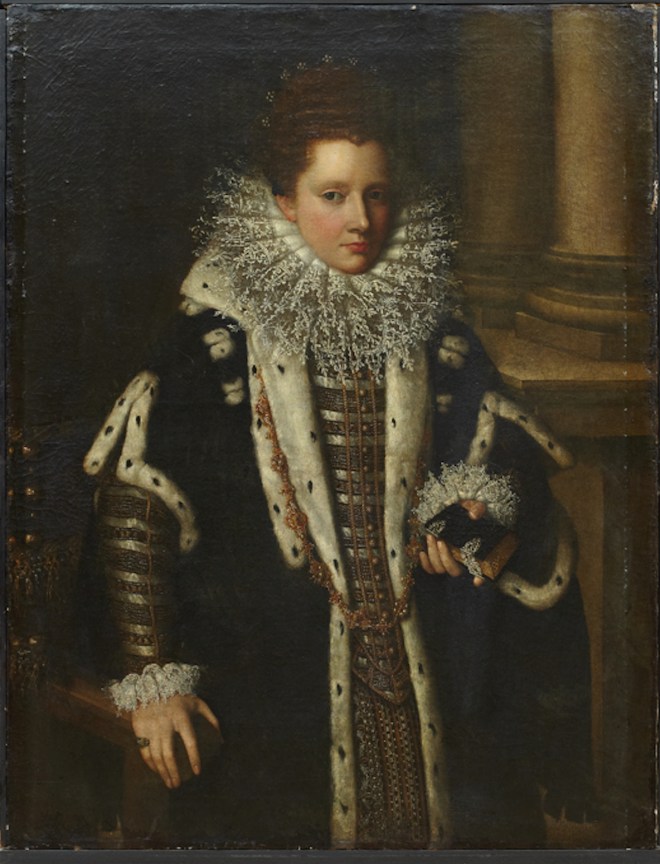
FONTANA_COSTANZA_SFORZA copy

The rediscovered portrait of Costanza Sforza by Bolognese painter Lavinia Fontana. The sale by Uppsala Auktionskammare takes place 14 June 2016. Credit: Uppsala Auktionskammare

[Read more…]

Ex-Ludovisi portrait of Antinous, long split between Rome and Chicago, stunningly matched then reunited through thrilling technology

When it comes to investigative art history, you’ve got to hand it to the Department of Ancient and Byzantine Art of the Art Institute of Chicago. Since early April—and until 28 August 2016—a fascinating exhibition has been telling the story of how the museum managed to reunite the truncated face of a Roman marble portrait, long held in its collection, with its original sculptural bust housed at the Museo Nazionale Romano Palazzo Altemps [inv. no. 8620].

The paired portrait fragment and the bust (now with an early modern face, and a clearly visible join) represent the emperor Hadrian’s presumed lover, the Bithynian youth Antinous, who drowned under suspect circumstances in the Nile on 30 October 130. And the kicker is that the bust—and conceivably also the separated face—once formed part of the Ludovisi collection of ancient sculpture.

CHI_CAT_9_11

3D scale model at (one-third) combining the Antinous pieces in Chicago and Rome. From the online catalogue Roman Art at the Art Institute of Chicago (in turn crediting Studio MCM srl, Rome)

[Read more…]