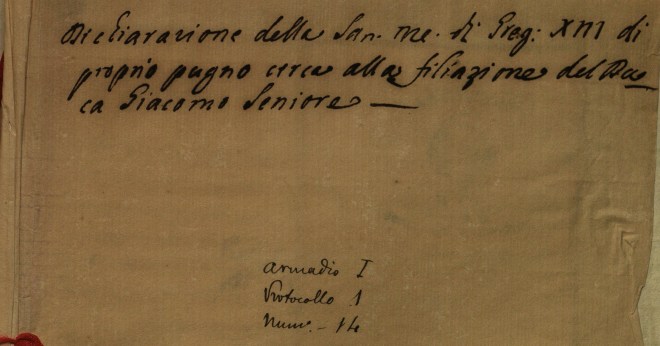
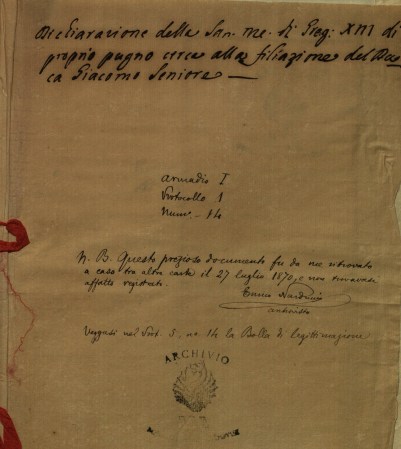
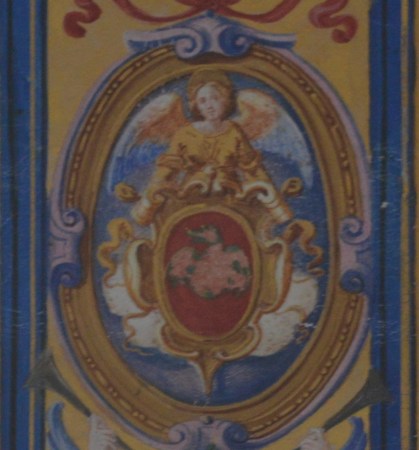
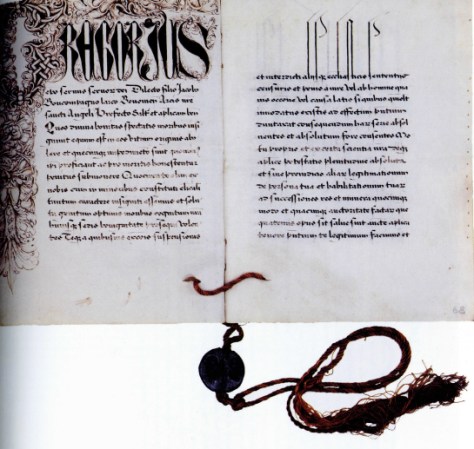
Archivist’s cover of Archivio Boncompagni Ludovisi protocollo 1 no. 14. All photos: Collection of HSH Prince Nicolò and HSH Princess Rita Boncompagni Ludovisi, Rome
An essay / text + translation in two parts by Michael Antosiewicz (Rutgers’18)
In Part I of this piece we examined the context for the decision of the cleric Ugo Boncompagni, the future Pope Gregory XIII (1505-1572-1585) to have a child, and the threefold process by which he had his son, Giacomo or Jacopo Boncompagni (born 8 May 1548), legitimated. Below is my transcription and translation of the second of those legitimation documents, a declaration of paternity that Ugo Boncompagni wrote in his own hand and signed on 22 December 1552 (Archivio Boncompagni Ludovisi prot. 1 no. 14).
Pio Pecchiai in his article “La nascita’ di Giacomo Boncompagni” (Archivi 21 (1954) 9-47, at 32-34) published a transcription of this document. But my text represents a new (and I hope improved) transcription from the original (digitized) declaration, as well as its first translation into English.
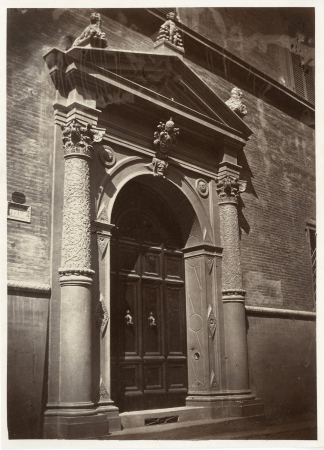
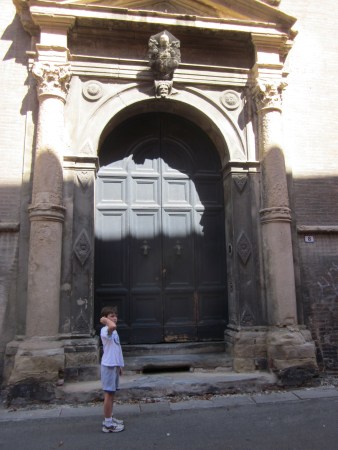
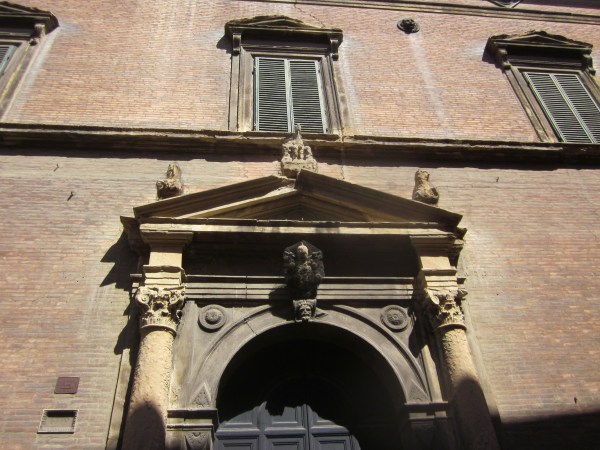
Palazzo Boncompagni, 6 Via del Monte, Bologna
THE SECOND DECLARATION REGARDING THE PATERNITY OF GIACOMO BONCOMPAGNI (22 DECEMBER 1552)
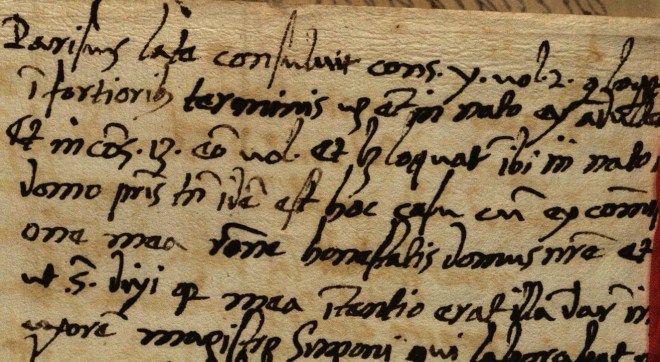
Parisius late consuluit cons. X. vol 2. qui loquitur in fortioribus terminis videlicet etiam in nato ex adulterio et in cons. 13. eodem vol. et licet loquatur ibi in nato in domo patris tamen idem est hoc casu cum ex commissione mea ratione honestatis domus nostre et ut supra dixi quia mea intentio erat illam dare in uxorem magistro Simone qui laborabat in domo ne ipse de hoc haberet noticiam exivit domum ad istum effectum pariendi tantum et non ob aliam causam ut scit D. Ludovica a malvasia et D. Dorathea de Scapis et alie mulieres que tunc in domo conservabantur et sic non vero ex hoc fienda difficultas cum domum ex mea commissione exiverit et ad istum effectum tantum. Et sciunt mulier Magistri Alexandri tonsoris Jeronimi et eius fillie in cuius domo peperit.
Parisio consulted widely Consiglia X. vol. 2, which says in rather strong terms namely in the case of a birth from adultery, and in Consiglia 13 of the same volume, and although it says there in the case of a birth in the home of the father, nevertheless it is the same in respect to this case since it happened by my command for the reason of the integrity of our home, and as I said above that my intention was to give her as a wife to Master Simone, who has laboring in the house, lest he himself have gain any public notoriety of this affair, she exited the house only for the purpose of giving birth and not on account of another cause as D. Ludovica Malvasia knows and D. Dorathea de Scapis and the other women who were at that time staying in the house; and thus trouble should truthfully not be made from this since she exited the home by my command and only to that effect [of giving birth]. And the wife of Master Alexander, the barber of Girolamo and his daughters, in whose house she gave birth, know [these things].
De eius nativitate Jeronimus fecit memoriam in quodam suo libello memorialium qui reperitur in hac capsa copto ex albo ex qua memoria una cum die legitimationis et ex die nuptiarum in quibus rogatus <est> Ser Vitalis de bobus et ex quadam lista existente in dicto libello de bonis illi datis quod tempore nativitatis Jacobi Madalena non erat nupta et sic natus est ex soluta ut in legitimatione dicitur.
Concerning his [Giacomo’s] birth Gironamo made a memorial in a certain pamphlet of his of memorials, which is found in this chest from a covered album; from this memorial together with the day of legitimation and from the day of marriage, which Ser. Vitale de Bobus recorded [Vitale be Buoi, the family’s notary], and from a certain extant list in the said pamphlet concerning the heredity given to him, [it stands] that at the time of the birth of Jacopo Madalena was not married and thus he [Giacomo] was born from an unmarried woman just as he is said to be in legitimation.
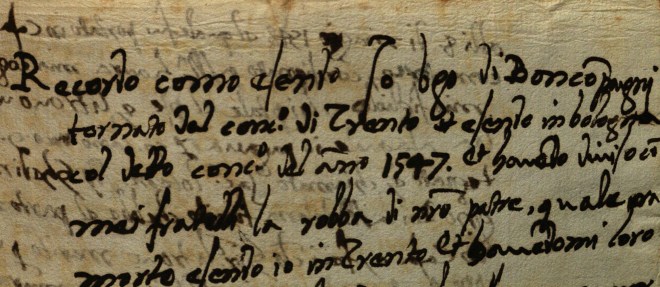
Recordo como esendo Io Ugo di Bonco(m)pagni tornato dal conc. di Trento et esendo in bologna col detto conc. del a(n)no 1547, et have(n)do diviso co(n) mei fratelli la robba di nostro patre, quale era morto esendo io in Trento et have(n)domi loro (contro mia voglia) data la casa nova per indiviso co(n) Giro. mio fratello el quale no(n) havia figlioli, mi parse di proverdermi de figlioli quali potesano habitar(e) in deta casa volendo io stare a roma, et esendo una giovane in casa quale era senza marito, che stava co(n) Madonna Laura moglie di Giro., mia cognata, e chiamata Madalena hebbi da fare co(n) lei e, dopo alcuni giorni la ingravadai e, stete in casa cusi gravida p. molti mesi como da tutti che venivano in casa seli vedeva el corpo grosso.
I record how I, Ugo di Boncompagni, having returned from the Council of Trent, and being in Bologna with the said Council of the year of 1547, and having divided the estate of our father with my brothers, who died when I was in Trent, and they having given to me (against my will) the new house inalienably with Girolamo my brother who does not have children, it seemed to me a good idea to provide myself with children, who would be able to inhabit the said house with I wanting to stay in Rome, and there being a young girl in the house who was without a husband, that was staying with Madonna Laura, wife of Girolamo, my sister-in-law, and <the girl was> called Madalena; I had business to take care of with her and after a few days I impregnated her; and she stayed in the house pregnant as such for many months so that everyone that kept on coming to the house would themselves see the [her] fattened body;
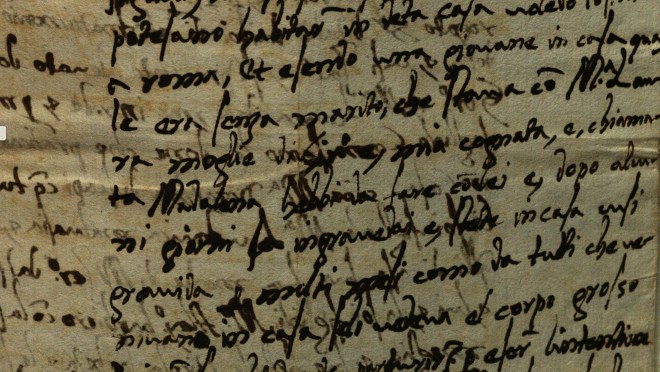
Poi quando fu el te(m)po de parturire (p. eser l’intentione mia di maritarla azo no(n) si palegiase cusi che havese fato uno figliolo anchora che si dicesse publicame(n)te chera gravida di me), perche havia pensato in M. Simone che murava in casa, Parse a Gironamo di mandarla in casa di M. Alessandro mio barbiere e, suo compatre dove li stete a parturir(e) e, mi fece un figliolo maschio alli 8 maggio 1548, el quale fu portato in casa dala comatre, consignato a Ma. Laura mia cognata p. mio figlio e, lei p. tale el p/e [NOTE 1] e, li trovo una balia, a la quale io pagava L. 50 l’an(n)o.
Afterwards when it had been time to give birth (for it being my intention to marry her, she therefore did not show herself in such a way that she made me a child, although she proclaimed herself publicly to be pregnant by me), because I was thinking about Master Simone who was building in the house, it seemed to Gironamo a good idea to send her to the house of Master Alessandro, my barber and her godfather, where she stayed to give birth; and she made me a boy on the eighth of May 1548, who was brought into the house by his Godmother, consigned to Madonna Laura, my sister-in-law, as my son, and she as such (?) and she found him, my son, a wet-nurse, to whom I was paying L. 50 each year.
A li 9 fu bategiato e, chiamato Jac. lo tene a batessimo M. Ghedino di Segno. Poi la Madalena, finito chebbe el parto torno in casa e, feci che Giro. li trovo marito p. via di M. Antonio triachino cioe M. Simone murator(e) et io li ma(n)dai p. el bancho de li ozelai [NOTE 2] scudi ce(n)to venti cinq(ue) d’oro quali li pago Math di li amorini cioe sc. 100 d’oro p. la dota e, 25 p. vestirla ne fu rogato Ser Vitale dai boi di deto matrimonio e, dota e, cusi Jaco e sempre stato alevato da Giro et Ma. Laura de le mie entrate e, p. mio figliolo Como sano le done che praticavano in casa cioe Ma. Dorothea di scapi co(n) tutti li soi figlioli Ma. Ludovica malvasia e, tutti quelli di casa sua La moglie di M Jero dal Ferro e, lui e, li soi figlioli, Mo Alex. barbiero co(n) la sua moglie e, sue figliole, Nicola Jacheta e, le sue done Ma. Isabeta e Lucretia sua figliola che stano da S.Martino quale sano el tutto; Orsolina che gia stava co(n) quelli dal ferro Tutti li vicini e, tutti li parenti e, M. Jo. bat. maltacheto la tenuto a cresima p. mio figliolo.
On the ninth he was baptized and called Jacopo. M. Ghedino di Segno held him at his baptism. Afterwards Madalena, once she had finished giving birth, returned to the [our] house. And I made it that Girolamo found there a husband by way of Master Antonio Triachino; that is, Master Simone the mason; and I ordered for him, through the bank of the ozelai, 125 scudi of gold which Math. of the Armorini paid him, namely 100 scudi for the dowry and 25 scudi for dressing her; Ser. Vitale dai boi chronicled the marriage and dowry. And as such Jacomo has always been raised by Girolamo and Madonna Laura by my income and as my son, as the women that were frequenting my house know, namely, Madonna Dorothea di Scapi with all her children, Madonna Ludovica Malvasia and all those of her house, the wife of Mr. Jer. dal Ferro and himself and his children, Master Alexander the barber with his wife and his children, Nicola Jacheta and her girls, Madonna Isabata and Lucretia her daughter who were from S. Martino who know the whole affair; Orsolina that was staying already with the dal Ferro; all the neighbors and all the relatives. And Master Jo. Bapt. Maltacheto held him at his confirmation as my child.
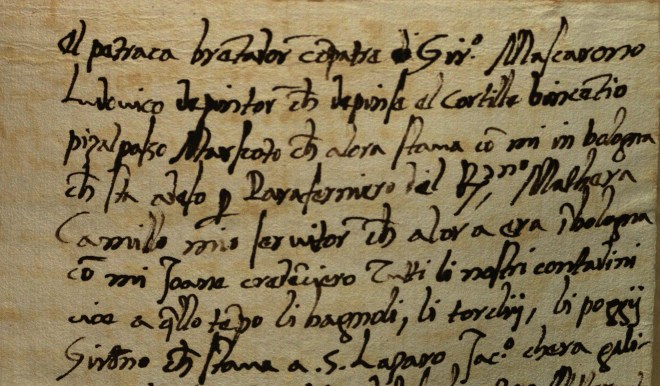
Tutti quelli praticavano in casa cioe maestro Philepono falignamo Jacomo ferrarese taglia pietra el Brocca da varignana li muratori li falegnami e, li depintori filioli di Biaggio depintor(e) el pentraca bre(n)tador(e) compatre di Gir. Mascarono Ludovico depintor(e) che depinse el cortille, Vince(n)tio pizalpasso Marscoto che alora stava co(n) mi in bologna che sta adeso p. Paraferniero del Rmo Mathera Camilo mio servitor(e) che alora era in bologna con mi, Joane credenciero Tutti li nostri contadini cioe a quello te(m)po li bagnoli, li torches, li poggij Girolamo che stava a S. Lazaro Jac. chera galinaro di Giro Bertino dal scelaro zopo M. Hercule severole da faenza pensator(e) in roma col qual veni a roma dal concilio di bologna e, li co(n)tai tutto el fatto e, tutti li pare(n)ti sano certo eser(e) mio figliolo e dicano asimigliarsi a nui dela casa e, che par(e) figliolo di Ma. Jacoma nostra sorela e, cusi lo te(n)go p. tale mio figlio e, da tutti voglio sia tenuto e, cognoscuto Ne credo che alcuno li possa dir(e) el contrario se no(n) p. malignita, el che non credo ne mancho [NOTE 3] seli habia da fare contraditione esendoli la casa notoria e, p. tale al presente lo te(n)go in casa mia in bologna sotto lo governo di Ma. Laura mia cognata e, in fede alli 22 di decemebr(e) nel 1552. Ho fatto la presente Jo Ugo di Boncompagni.
All those that were frequenting the house, namely Master Philepono the carpenter, Giacomo the stone cutter from Ferrara, the Brocca from Varignana, the masons, the carpenters, the apprentices of the painter Baggio; the Pentraca wine-porter, the godfather of Gir. Mascarono; Ludovico the painter that painted the courtyard, Vincentio Pizalpasso Marscoto who was then staying with me in Bologna, that now remains as the Paraferniero of Rmo Mathera; Camilo my servant that was then in Bologna with me, Joana the wine-taster; All our farmers, namely at that time the Bagnoli, the Torchij, the Poggij, Girolamo that was staying at S. Lazaro, Jacomo who, a lame person, was the seller of hens of Gir. Bertino; Master Hercule Severole from Faenza, a thinker in Rome, with whom I came to Rome from the Council of Bologna, to all of them [whom I just listed] I related the entire affair; and all the relatives know for certain that he is my child and they would say that he resembles us of the said house and that he appears to be the son of Madonna Jacoma our sister. And as such I hold him as my son and I want him to be esteemed and recognized by everyone. Nor do I believe that anyone could speak the contrary against him if not for malignity, and since the reputed house is there [as proof], I do not believe anyone with have cause to make contradiction, and as such for the present I keep him in my house in Bologna under the governorship of Madonna Laura my sister-in-law.
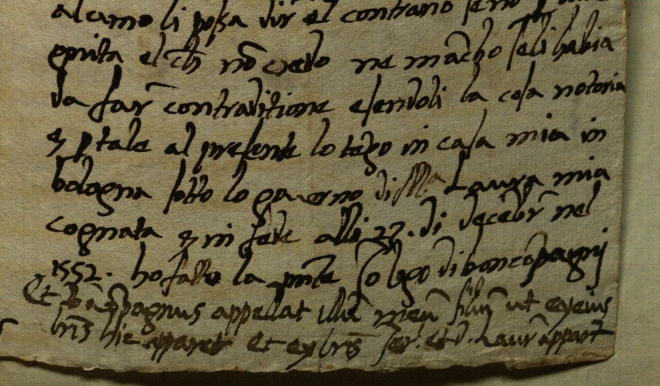
Et Boncompagnus appellat illum meum fillium ut ex eius litteris hic apparet et ex litteris etiam dictae Laurae apparet
I, Ugo di Boncompagni, made this present <declaration>. And Boncompagno calls that one my son as he appears here from the records of him and as he also appears from the letters of the said Laura.
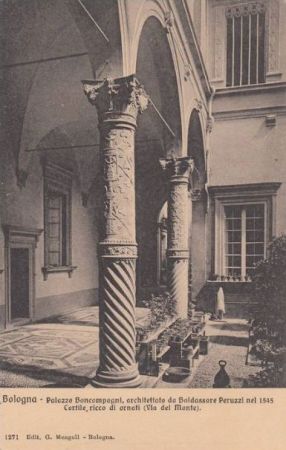
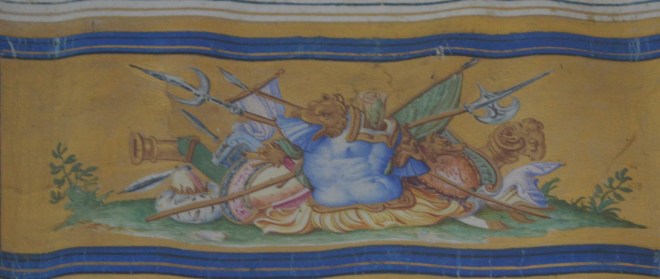
Interior of Palazzo Boncompagni, Bologna, built between 1539 and 1546. The attribution to the famed architect Baldassare Peruzzi of the cortile bears investigation, since he died in 1536
[NOTE 1] This phrase has caused much confusion for both of the earlier transcribers of the document and myself. One interpretation renders the phrase “al presente,” “at the present.” I find this solution unsatisfactory. In the first place, it changes the singular masculine article into a preposition. Since lowercase “a” and “e” are very distinguishable in Ugo’s handwriting, I feel that it is a change that cannot be reasonably made. This view also fails to take into account the subsequent occurrences of “presente” in the declaration. “Presente” is otherwise fully written or abbreviated differently from the “p/e” in this case. In one of those instances, the phrase “al presente” does occur with a clearly written “al.” In my view, the “p/e” is an abbreviated adjective or noun and forms a predicative phrase with the article (el p/e) in apposition to an implied object pronoun “lo” and an implied verb, such as “tenere”—the translation thereby being, “she holds him as the (noun)/ (adjective) one” Although this interpretation does make its own assumptions, it does reflect formulations used elsewhere in the document and better accords to the context. Further research into the legal texts used to argue legitimation may reveal what “p/e” actually means.
[NOTE 2] This name most likely refers to a bank or a banking family.
[NOTE 3] The phrase “ne mancho” is still not clear; it most likely bears some legal significance that will be clarified with further legal research. Nonetheless, the sentence indicates that the house, on account of its reputation (“notoria”), confirms Ugo’s account and certifies Giacomo’s legitimate filiation.
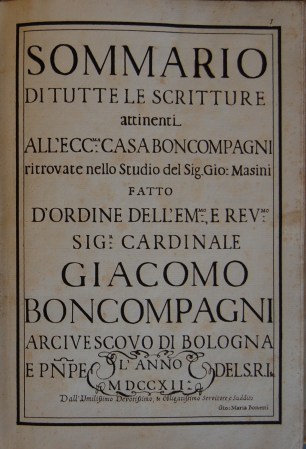
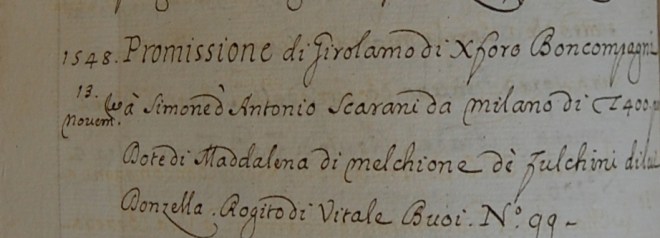
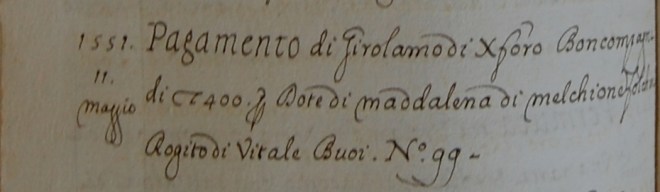
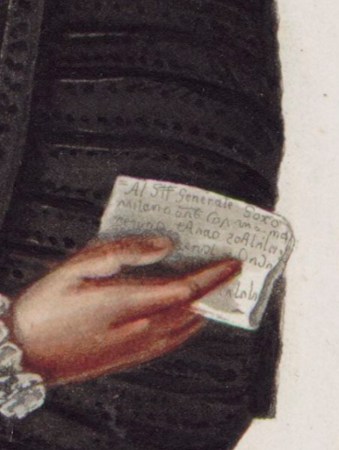
This register of cash disbursements by the Boncompagni family (compiled 1712) shows that a dowry for a marriage was promised to Giacomo Boncompagni’s mother on 13 November 1548 (five months after she gave birth)—and finally paid on 11 May 1551. Collection of HSH Prince Nicolò and HSH Princess Rita Boncompagni Ludovisi, Rome.
About the author: Michael Antosiewicz is an undergraduate student in the School of Arts and Sciences Honors Program at Rutgers University. Michael majors in History and Classics with a focus in both Greek and Latin. He is also a Lloyd C. Gardner Fellow. He has assisted with the Archivio Boncompagni Ludovisi project since 2015, under the auspices of Rutgers’ Aresty Undergraduate Research Assistant Program. His interests primarily consist of early-modern and nineteenth century cultural history as well as examining the evolving meaning of the “classical” tradition during that time period. His plans involve becoming a professor of either History or Classics.
Warmest thanks, as always, are owed to HSH Prince Nicolò Boncompagni Ludovisi and HSH Princess Rita Boncompagni Ludovisi, for making this archival research possible.
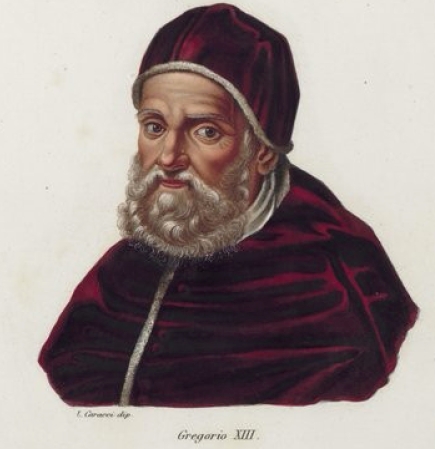
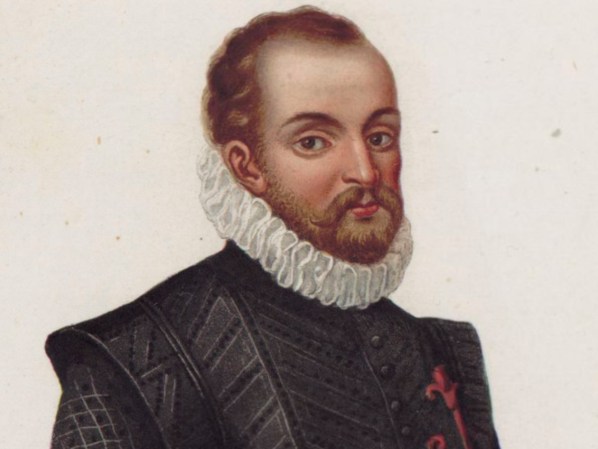
Ugo Boncompagni = Pope Gregory XIII. From Pompeo Litta, Famiglie celebri italiane II (1836)

 Archivio Digitale Boncompagni Ludovisi