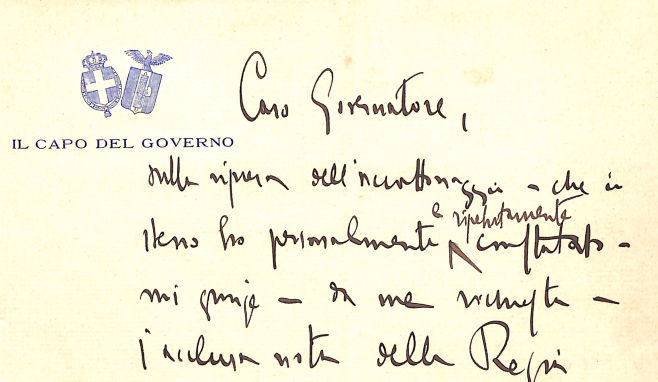
NEW from 1929: An unpublished letter by Mussolini sheds light on Fascist Rome’s struggle with street begging

An illustrated essay by Sarah Moynihan (Rutgers ’21)

Visitors to Rome who travel away from the popular tourist sites in the Centro Storico and to the Portuense district can find, with just a bit of difficulty, in the shadow of an overpass, the front gate of the Casa Vittoria. Located at the corner of Via Portuense and Via Quirino Majorana, the building is currently home to an unassuming day center for patients with Alzheimer’s disease.

However, a dossier from the Archivio Boncompagni Ludovisi, recovered with the help of HSH Princess Rita Boncompagni Ludovisi, illuminates that the Casa Vittoria was once the center of significant internal governmental controversy during the Fascist regime of Benito Mussolini.
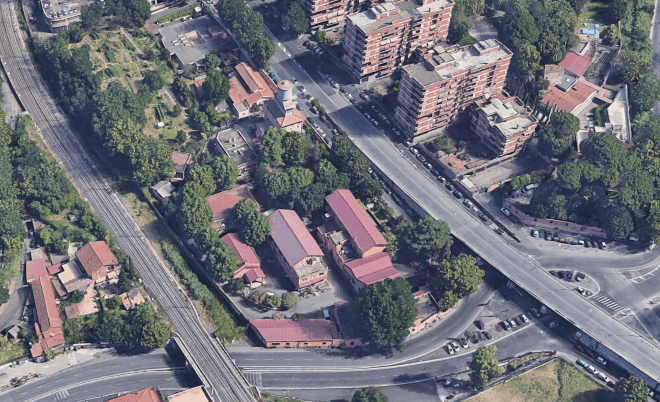
Built in the late nineteenth century, since 1905 it was home to the olive oil processing company Oliere dell’Italia Centrale. In 1927, this factory, which by then had had fallen into disuse, was converted by the Italian government into a new shelter for indigent beggars called a “mendicicomio”. In January of 1928, the mendicicomio was opened for operation. For the general background, see the discussion of Luciano Villani, Le Borghate del Fascismo (2012) esp. Chapter 1. [Read more…]
NEW from the 1680s: Villa Ludovisi account book documents fate of family’s famed art collection

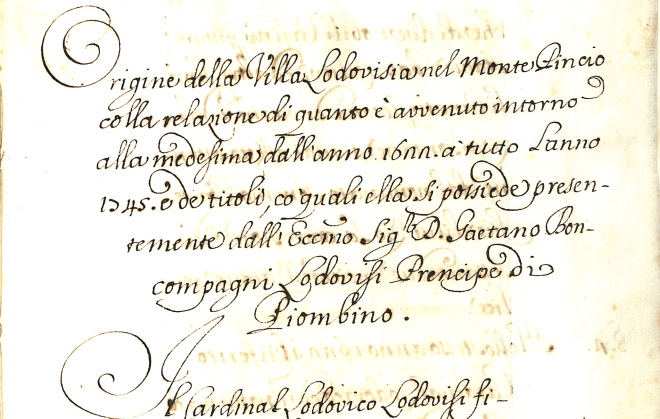
Detail from first page (1R) of the Villa Ludovisi account book (Archivio Boncompagni Ludovisi Prot. 365). Collection of †HSH Prince Nicolò and HSH Princess Rita Boncompagni Ludovisi, Villa Aurora, Rome.

An illustrated essay by Jacqueline Giz (Rutgers ’24)

One of the most promising items to come out of the Archivio Boncompagni Ludovisi at the Villa Aurora, discovered in 2010 by HSH Princess Boncompagni Ludovisi and conserved through her efforts and those of her husband †HSH Prince Nicolò Boncompagni Ludovisi, is an account book—wholly unpublished—for the Villa Ludovisi encompassing the years 1622 through 1745, and spanning about 1000 pages.

The book—catalogued in the Archive as Protocollo 365—was compiled for Gaetano Boncompagni Ludovisi (1706-1777), the 6th great grandfather of Prince Nicolò Boncompagni Ludovisi, shortly after his accession in 1745 as Prince of Piombino.

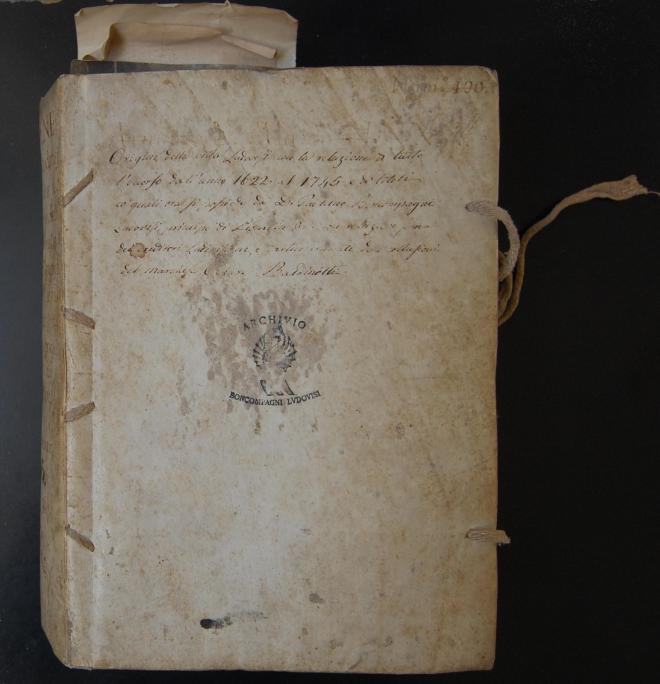
The inscription on its cover promises to detail the “Origin of the Villa Ludovisi relating everything that happened from the year 1622 to 1745”, starting from the papacy of Gregory XV Ludovisi (who reigned from 1621-1623) and the cardinalate of his nephew Ludovico Ludovisi, who established the Villa Ludovisi on Rome’s Pincian hill. Oddly, Boncompagni Ludovisi family archivist Giuseppe Felici made no use of this volume in his monumental Villa Ludovisi in Roma (1952). Though its contents naturally overlap with items we know from elsewhere, much appears to be new.

Front cover of Villa Ludovisi account book (Archivio Boncompagni Ludovisi Prot. 365), compiled shortly after 1745. Collection of †HSH Prince Nicolò and HSH Princess Rita Boncompagni Ludovisi, Villa Aurora, Rome.

[Read more…]

The ‘Sallustian’ Obelisk: A Remarkable Journey from the Villa Ludovisi to the Spanish Steps

An illustrated essay by Isabel Heslin (Lehigh ’21)

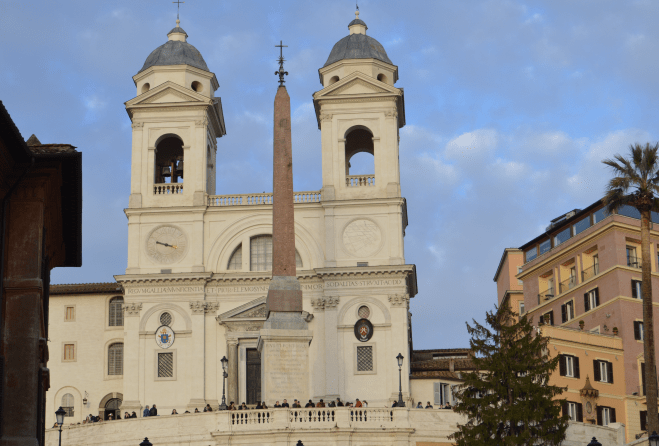
Almost everyone who has visited Rome has seen the towering, 14 meter high obelisk on its base at the top of the Spanish Steps. It gleams over the Piazza della Trinità dei Monti a bit mysteriously, for the history of the obelisk is relatively unknown.

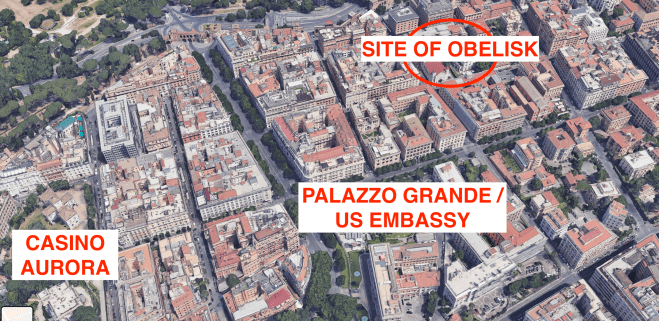
As it happens, the obelisk used to be the property of the prominent Ludovisi family. They acquired it almost precisely 400 years ago, in 1621, when Cardinal Ludovico Ludovisi, the nephew of Pope Gregory XV Ludovisi, purchased a large tract of land on the Pincian hill that in the late first century BCE first belonged to Julius Caesar, and then the Roman historian Sallust. These gardens—the Horti Sallustiani—later passed to the emperor Tiberius, and remained an imperial enclave for some centuries to come. We can tell from several threads of evidence that the obelisk was positioned somewhere in the area now demarcated by the Vie Sicilia, Sardegna, Toscana and Abruzzi.

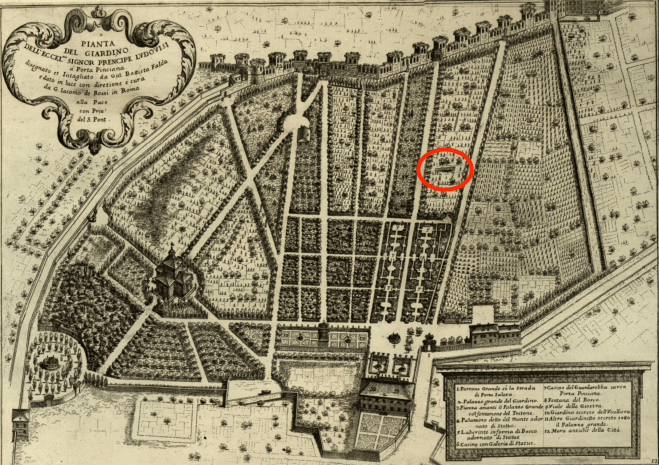
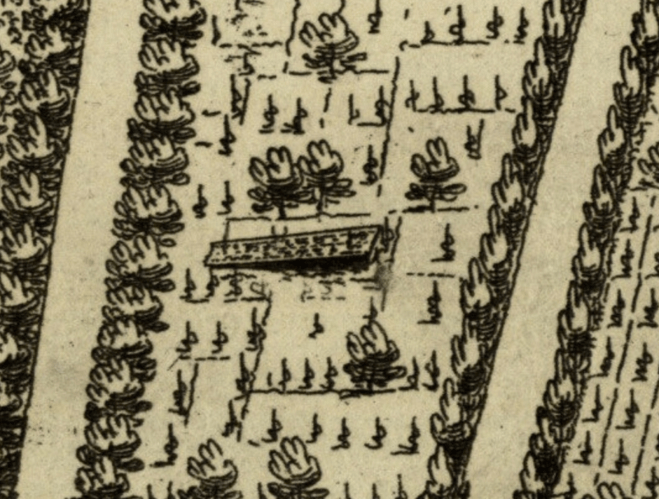
Top: plan of the Villa Ludovisi, published in G.B. Falda, Li giardini di Roma: con le loro piante alzate e vedute in prospettiva (1670). Middle: detail of Falda plan, showing remains of obelisk. Bottom: Google Satellite view of Rione Ludovisi, showing approximate site of obelisk.

[Read more…]