
As W. C. Fields once said, “I spent a week in Philadelphia one Sunday.” Well, on the first Sunday of the new year—5 January 2025—five veterans of this website gathered in Philadelphia to provide a week’s worth of Villa Ludovisi material in the space of a morning colloquium.
The venue? The joint annual meeting of the Archaeological Institute of America (AIA) and Society for Classical Studies (SCS). And the panelists? Emilie Puja (Rutgers University), Carole Raddato (Frankfurt / AIA Rome Society), Hatice Köroglu Çam (Tyler School of Art of Temple University), Jacqueline Giz (University of Michigan), and ADBL editor Corey Brennan (Rutgers). Their focus was on the display, dispersal and present whereabouts of the old Villa Ludovisi’s collection of antiquities, in all media.
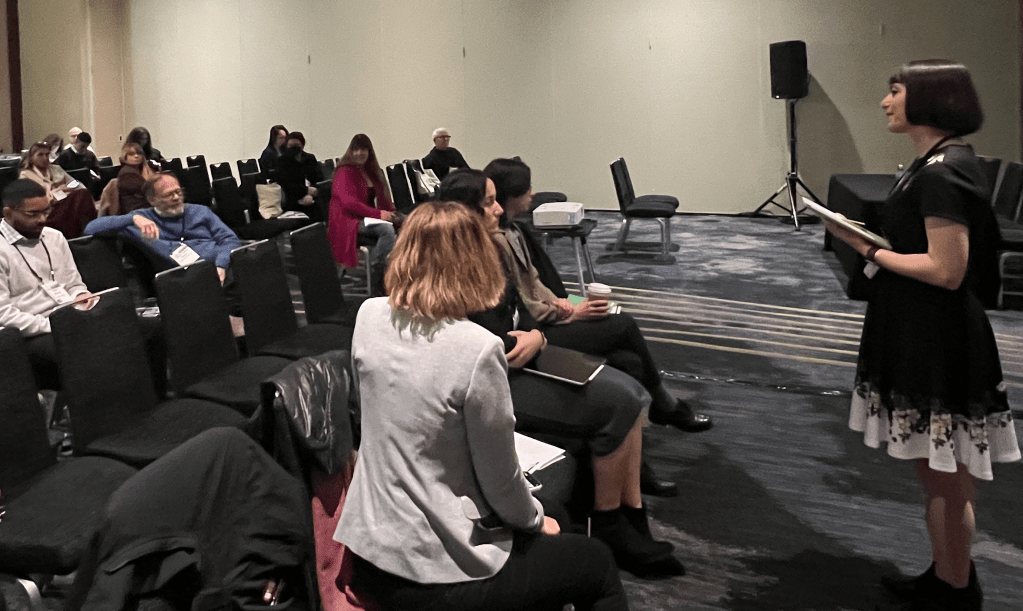
At the AIA Annual Meeting, Hatice Köroglu Çam (PhD student, Temple Univ. Tyler School of Art and Architecture) answers questions after her presentation on the Ludovisi Pan. Photo: TC Brennan
The Sunday morning colloquium highlighted more than a dozen years of first-hand work on the Villa Ludovisi and especially its Casino dell’Aurora, all made possible through the patronage and generosity of †HSH Prince Nicolò and HSH Princess Rita Boncompagni Ludovisi. A main aim of this panel was to show that the members of this group as well as other project collaborators had created new knowledge and deepened understanding of the cultural significance of the landmark Casino dell’Aurora, in particular its classical connections.
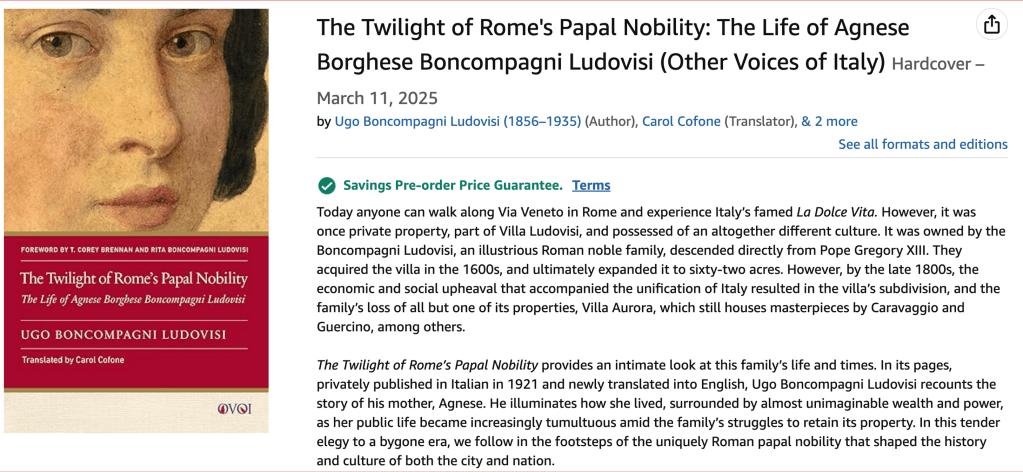
Special mention was made of the fact that March 2025 will see the publication by Rutgers University Press of an extraordinary work by ADBL assistant director, Carol Cofone, entitled The Twilight of Rome’s Papal Nobility: The Life of Agnese Borghese Boncompagni Ludovisi. This is the translation of a limited edition and immensely valuable memoir detailing life in the Villa Ludovisi by Agnese’s son, Ugo Boncompagni Ludovisi, originally published in Italian in 1921. You can read Carol’s discussion of the self-portrait on the cover of this book here.
The Sunday session also gave scope to discuss the creation of a database, PABLO—Provenance Archivio Boncompagni Ludovisi Online—that will eventually host a comprehensive provenance record for the former and present collection of the Boncompagni Ludovisi family, in all media. PABLO is the product of an interdisciplinary collaboration between four past or present undergraduate Rutgers University students: colloquium panelists Jacqueline Giz (now a PhD candidate at Michigan) and Emilie Puja (a dual degree BA/MI candidate at Rutgers ’25/’26), as well as Geetika Thakur (Rutgers ’23), and Vaishnavi Vura (Rutgers ’24)
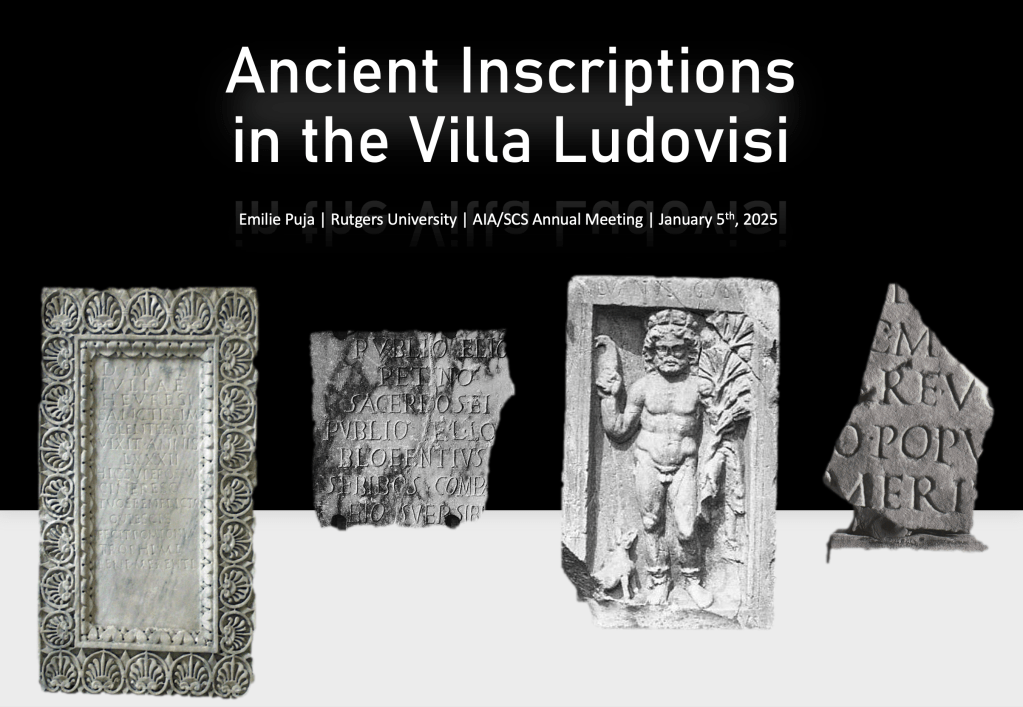
The colloquium’s first speaker, Emilie Puja, sketched for the first time the development, display and dispersal of Roman-era inscriptions in the Villa Ludovisi, now quite scattered or lost, and offered new and riveting material about the modern era Latin epigraphy of the Boncompagni Ludovisi family, especially both above and below the floor of their church of S Ignazio in Rome.
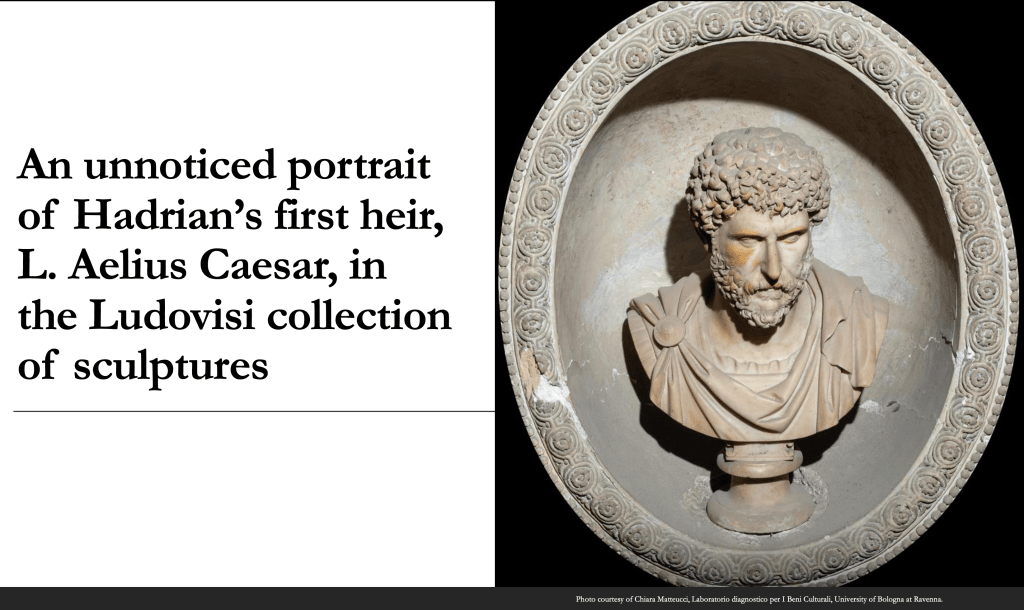
Next, Carole Raddato argued that a portrait bust in the Casino dell’Aurora, after 1641 universally identified as “Marcus Aurelius”, indeed depicts Hadrian’s first heir, Lucius Aelius Caesar, a discovery that she made in the first moments of her first visit to the Casino in 2019. The identification is an unusually important one, given that there are no more than a half-dozen sculptural portraits of Aelius Caesar that have been published.
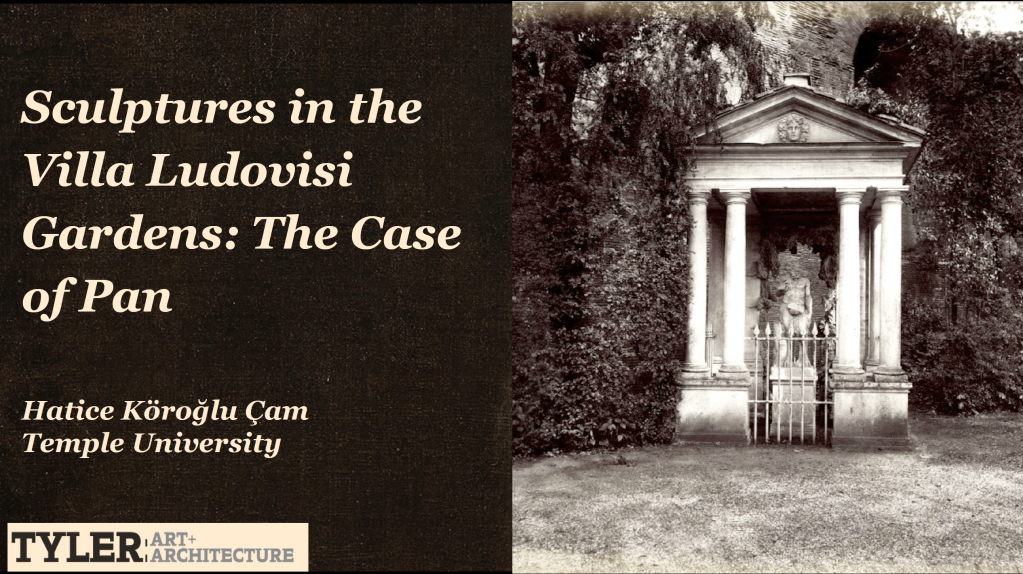
Third, Hatice Köroglu Çam discussed an important yet essentially unstudied sculpture displayed for the past 400 years in the family’s garden, a life-size sculpture of Pan. For the first 125 of those years it was thought to be ancient, then for a time, until the last quarter of the nineteenth century, was generally identified as the work of Michelangelo. Hatice’s talk is based on personal examination of the sculpture in its current position in the garden of the Casino dell’Aurora, where it has stood since 1901.
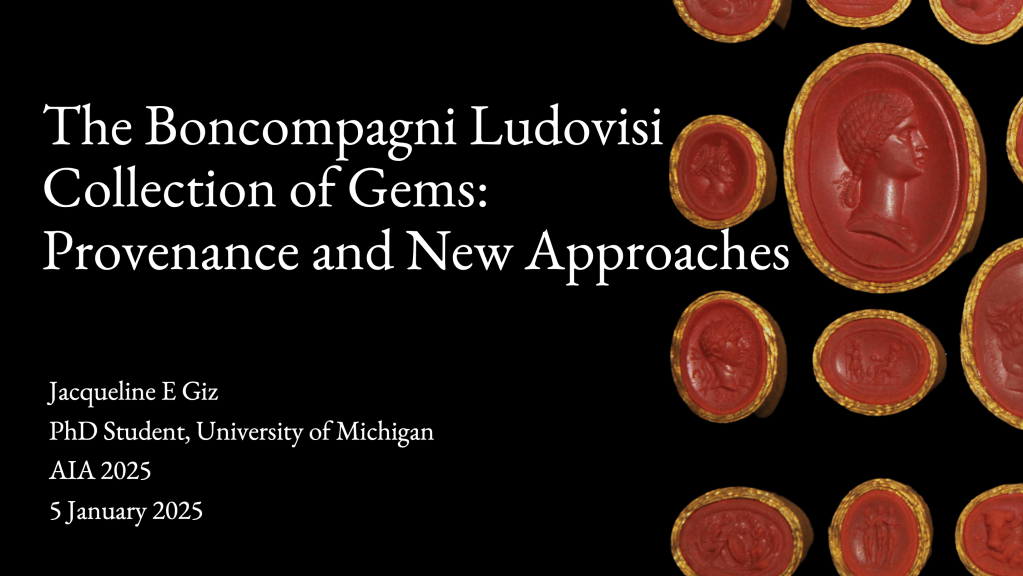
The fourth panelist, Jacqueline Giz, treated the complicated dispersal in the late nineteenth century of ancient gems in the Boncompagni Ludovisi collection, with particular attention to the history of a veristic amethyst intaglio portrait of a man holding his hand to his chin. To return this piece to its ancient context, Jacqueline analysed the gesture on the intaglio, offering this framework as a step towards removing modern bias from our understanding of such portraits.
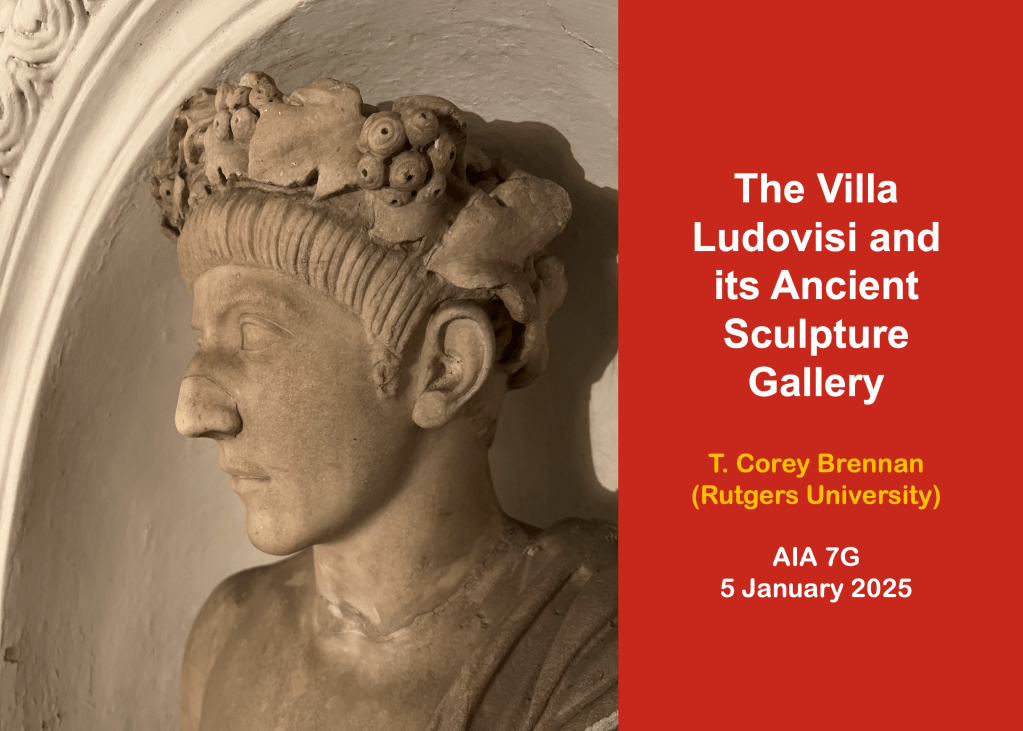
Finally, T. Corey Brennan offered a brief sketch of the Villa Ludovisi as a fixture on the Grand Tour, with an emphasis on how visitors experienced its ancient sculptures exhibited in interior spaces. He underlined precisely why a long line of noted literary and artistic figures from the 17th through 19th centuries found their viewing of the Ludovisi marbles simultaneously exhilarating and disappointing.
Each of these five presentations—plus much more on associated themes—is slated for publication in a forthcoming book with Brepols, Villa Ludovisi: A Biography, co-edited by Princess Rita Boncompagni Ludovisi and Corey Brennan. Can’t wait? You can read preliminary versions of contributions by Emilie Puja, Carole Raddato, Hatice Köroglu Çam and Jacqueline Giz on this platform, and that by Corey Brennan on the Antigone Journal website, plus view the Villa Ludovisi colloquium’s extensive bibliography here.
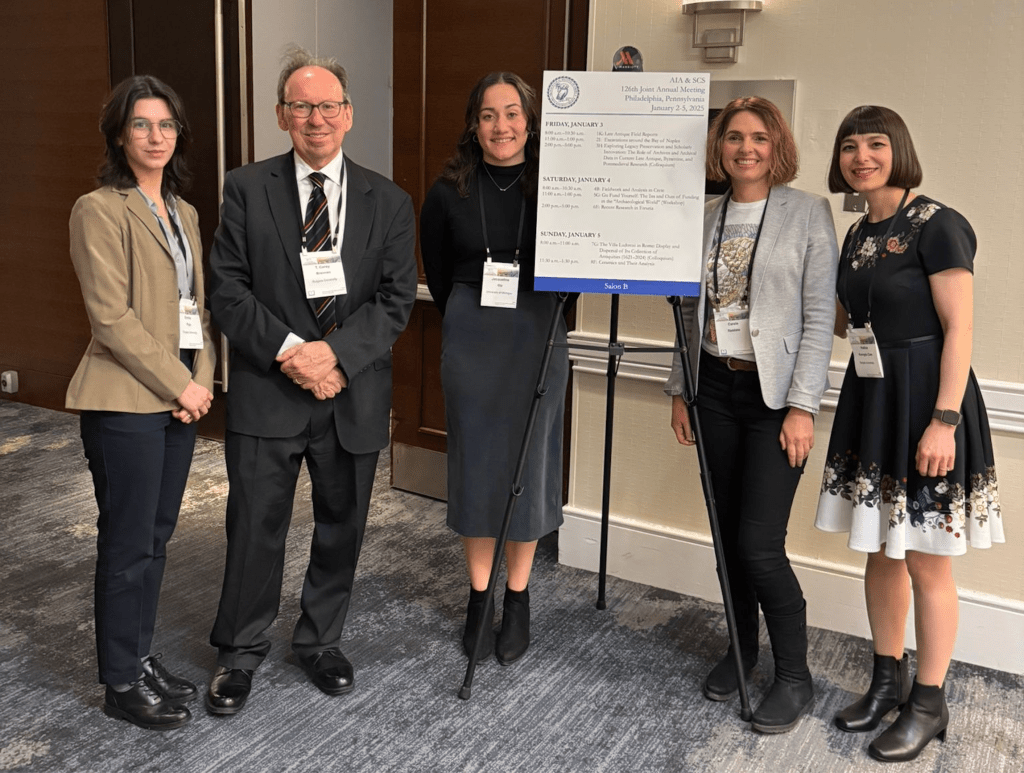
AIA panelists, from left, Emilie Puja (Rutgers), Corey Brennan (Rutgers), Jacqueline Giz (Michigan), Carole Raddato (Frankfurt / AIA Rome Society), and Hatice Köroglu Çam (Tyler School of Art and Architecture, Temple University). Photo: Valentina Follo.
 Archivio Digitale Boncompagni Ludovisi
Leave a comment